
Introduction: Can You Build a Career in Sports Management in India?
For millions of Indians, sports means watching cricket, following the IPL, cheering for the national team or playing football with friends.
But behind every successful sporting event is an entire team of professionals working on sponsorships, marketing, operations, athlete management, broadcasting, ticketing and finances.
This creates an important opportunity for people who love sports but do not necessarily want to become professional athletes.
If you are wondering how to make career in sports management in India, the good news is that you do not have to be an exceptional sportsperson to enter the industry. You need a combination of business knowledge, communication skills, practical experience and a clear understanding of how the sports ecosystem works.
India’s sporting ecosystem includes professional leagues, sports academies, event organisers, governing bodies, broadcasters, sports marketing agencies, fitness businesses and grassroots competitions. The Indian Institute of Management Mumbai, in collaboration with the International Institute of Sports & Management, offers a postgraduate programme focused on the business and operational aspects of sports, reflecting the growing importance of professional management in this field.
However, there is one crucial point that aspiring professionals often overlook: getting a sports management qualification and building a successful sports career are two different things. Employers and clients also need evidence that you can organise events, attract sponsors, manage budgets, communicate with athletes and deliver measurable results.
In this guide, you will learn how to enter sports management, which courses to consider, what jobs are available, how much you might earn and how to build experience even if you are starting with a limited budget.
1. What Is Sports Management?
Sports management is the business of planning, organising, promoting and managing sporting activities, athletes, teams, events and organisations.
It combines traditional business functions with the specific requirements of the sports industry.
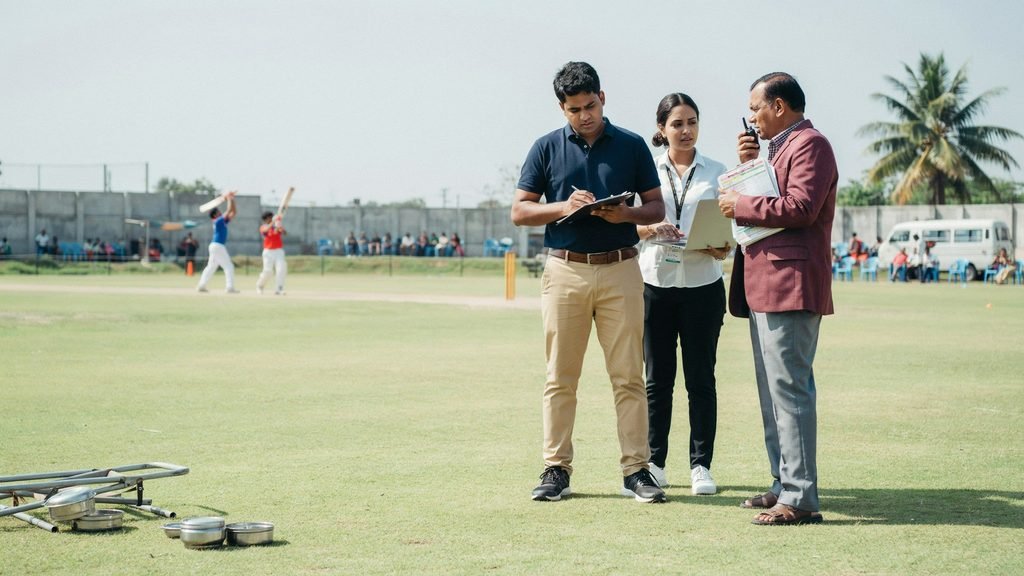
For example, organising a local cricket tournament involves much more than booking a ground. Someone must prepare the budget, secure registrations, manage payments, coordinate umpires, arrange equipment, attract sponsors, promote the event and ensure that participants have a good experience.
These are all sports management responsibilities.
Similarly, a professional football club needs people to manage partnerships, fan engagement, commercial revenue, logistics, communications and matchday operations.
Sports management professionals may work in the following areas:
- Sports event management and tournament operations.
- Sports marketing, advertising and branding.
- Sponsorship sales and partnership management.
- Athlete and celebrity management.
- Team, league and club administration.
- Sports broadcasting and digital media.
- Sports analytics and business intelligence.
- Sports facility and academy management.
- Grassroots sports development and talent identification.
- Sports entrepreneurship and technology.
The field is suitable for students, working professionals, former athletes and entrepreneurs who want to work in the business of sport.
2. Why Choose a Career in Sports Management in India?
Sports is not limited to professional cricket anymore. Opportunities exist across multiple sports, including football, badminton, kabaddi, athletics, hockey, basketball, tennis, running and emerging sporting formats.
India’s sporting ecosystem includes government institutions, private organisations, sports federations, leagues, academies and event businesses. NITI Aayog’s documentation on the sports ecosystem identifies stakeholders across government, autonomous bodies, private enterprises and public-private partnerships.
This variety means that sports management graduates can explore several career paths rather than depending on a single league or sport.
Growing opportunities beyond professional cricket
Cricket remains a major commercial attraction, but sporting opportunities also emerge through school competitions, university tournaments, corporate leagues, amateur running events, local academies and community sports programmes.
These activities need people who can manage registrations, coordinate logistics, market events and build partnerships.
Sports and digital media are increasingly connected
Sports organisations need professionals who understand social media, content creation, online communities, digital advertising and audience engagement.
A person who can combine sports knowledge with digital marketing can work with teams, athletes, academies, sports brands or independent event organisers.
Opportunities for entrepreneurs
Sports management is also relevant to people who want to establish their own sports-related businesses.
Examples include:
- Organising local tournaments and talent competitions.
- Building a sports events company.
- Starting a sports marketing agency.
- Developing a sports content website or YouTube channel.
- Providing sponsorship and athlete-brand partnership services.
- Building a platform connecting athletes, coaches, academies and competitions.
The important lesson is that you do not always need to wait for a large sports organisation to hire you. You can start by solving a small, genuine problem in the sports ecosystem and gradually develop your expertise.
3. What Qualifications Do You Need for Sports Management?
One of the most common questions is whether a specific degree is compulsory.
The answer depends on the role, employer and career path you choose. A relevant qualification can help, but practical experience, communication skills and industry knowledge are also important.
After Class 12: Bachelor’s degree in sports management
Students who have completed Class 12 can investigate undergraduate programmes in sports management or business programmes that offer sports-related specialisation.
A Bachelor of Management Studies (BMS) in Sports Management is one example of a relevant undergraduate route.
For instance, Nagindas Khandwala College lists sports management programmes covering areas such as sports marketing, event management, finance, branding and business administration.
Before applying, confirm the current programme name, admission requirements, fees, curriculum, internship structure and placement information directly with the institution.
After graduation: Postgraduate diploma or master’s degree
Graduates from commerce, management, arts, science, engineering and other disciplines may consider postgraduate programmes in sports management.
A postgraduate qualification can be useful if you want to change careers, develop specialist knowledge or enter the industry with a structured academic background.
One programme to investigate is the Postgraduate Diploma in Sports Management at IIM Mumbai, offered jointly with IISM. Its published programme description covers management principles, sports governance, sponsorship, media rights, facility management and analytics.
Check the latest admission criteria, course duration, fees and placement details before making a decision.
Short-term courses and certifications
If you are already working or cannot commit to a full-time degree, consider focused courses in:
- Sports marketing and sponsorship.
- Event management.
- Digital marketing and social media.
- Project management.
- Data analytics and spreadsheets.
- Sales and business development.
- Sports communication and journalism.
A short course is most useful when you apply what you learn to a real project.
For example, a digital marketing certificate becomes more valuable when you can demonstrate how you promoted a tournament, increased registrations or improved social media engagement.
Can former athletes enter sports management?
Absolutely. Former athletes may already understand training schedules, competition pressure, team dynamics and the challenges faced by players.
However, knowledge of sport alone may not be sufficient for commercial or administrative roles. Learning budgeting, marketing, communication, operations and partnership development can help translate sporting experience into a management career.
4. Best Courses and Institutions to Explore
There is no single best sports management course for everyone. Your choice should depend on your educational background, career objective, budget and preferred learning format.
| Course or pathway | Suitable for | What to investigate |
|---|---|---|
| Undergraduate sports management degree | Class 12 students | Curriculum, internships, fees and recognition |
| Postgraduate sports management diploma | Graduates | Industry exposure, project work and eligibility |
| Master’s in sports management | Graduates seeking deeper specialisation | Duration, academic requirements and career outcomes |
| Event management course | Aspiring tournament and event professionals | Live-event experience and operations training |
| Digital marketing certification | Sports marketers and content professionals | Practical campaigns and analytics |
| Business or analytics qualification | Commercial, finance and strategy roles | Sports-related projects and relevant internships |
When comparing institutions, do not choose a course simply because its website features famous athletes or impressive stadium photographs.
Investigate the actual learning experience.
Ask these questions before paying the fees:
- Does the course include internships or live sports projects?
- Which companies or organisations have hired recent graduates?
- Are published placement statistics independently verifiable?
- What proportion of students secure relevant sports-industry roles?
- Are faculty members actively involved in the sports industry?
- Does the total fee justify the likely career benefit?
- Can students work on actual tournaments, sponsorship proposals or marketing campaigns?
A recognised qualification can provide structure and networking opportunities. Nevertheless, your practical portfolio should grow alongside your education.
5. Top Career Options in Sports Management in India
Understanding the available roles will help you choose the right specialisation instead of pursuing a course without a clear objective.
5.1 Sports event manager
Event managers coordinate tournaments, leagues, marathons, school competitions, corporate sporting events and other competitions.
Their responsibilities can include venue selection, registration management, vendor coordination, scheduling, participant communication, safety planning and event-day execution.
This is a practical entry point for people who enjoy organising activities and solving problems under pressure.
5.2 Sports marketing manager
Sports marketing professionals promote athletes, teams, leagues, academies, events and sports brands.
They develop campaigns, manage social media, coordinate advertising, improve audience engagement and measure marketing performance.
Skills in digital advertising, content strategy, search engine optimisation and analytics can be particularly useful.
5.3 Sponsorship and partnership executive
Sponsors provide financial or in-kind support to sporting activities in exchange for agreed benefits.
A sponsorship professional identifies suitable brands, prepares proposals, pitches partnership opportunities, negotiates deliverables and maintains client relationships.
For example, a local cricket tournament might approach a sports equipment retailer, fitness centre, food business or regional brand with a proposal covering event branding, promotional content and participant engagement.
The key is to demonstrate the commercial value of the partnership instead of merely asking a business to support sport.
5.4 Athlete and talent manager
Athlete managers help sportspeople with brand partnerships, professional opportunities, public relations, commercial negotiations and career planning.
Depending on the role, the work may also involve coordinating appearances, managing schedules and helping athletes build their personal brands.
Trust, negotiation, communication and an understanding of contracts are essential.
5.5 Sports operations executive
Operations professionals ensure that the logistical side of a sporting activity works efficiently.
They may coordinate equipment, venue access, team schedules, transportation, accreditation, vendors, staff and event-day procedures.
People with strong organisational skills often find this role a good starting point.
5.6 Sports media and content professional
Sports media roles include sports journalism, video production, social media management, photography, content writing, podcast production and digital publishing.
A strong portfolio can help demonstrate your ability to create engaging sports content and understand the audience.
5.7 Sports analyst
Sports analysts may work with performance data, business intelligence, fan behaviour, ticket sales or commercial reporting.
The required technical skills depend on whether the role focuses on athlete performance or business analytics.
For commercial analytics, Excel, data visualisation and statistical thinking can be useful. Performance-analysis roles may require additional sport-specific technical knowledge.
5.8 Sports academy or facility manager
Academies and facilities need professionals who can manage bookings, memberships, coaching schedules, staff, maintenance, finances and customer relationships.
This career path may appeal to people interested in the operational and entrepreneurial side of sport.
5.9 Grassroots sports development professional
Grassroots professionals work with schools, communities, academies, non-profit organisations and sports development initiatives.
Their work may involve participation programmes, competitions, talent identification and partnerships with local institutions.
These roles are particularly relevant to people interested in expanding access to sport beyond elite competition.

6. Sports Management Salary in India
Salary is an important consideration when choosing a career, but there is no universal salary scale for sports management professionals.
Earnings vary according to experience, employer, location, role, education, communication skills and the commercial scale of the organisation.
A sports marketing executive at a small agency may have a very different compensation package from a sponsorship professional working with a major league or established brand.
The following figures are illustrative planning estimates, not verified national salary averages or guaranteed offers.
| Experience level | Indicative annual salary range |
|---|---|
| Intern or trainee | ₹0–₹3 lakh, depending on the arrangement |
| Entry-level executive | ₹2.5–₹5 lakh |
| Professional with 2–5 years of experience | ₹4–₹9 lakh |
| Experienced manager | ₹8–₹15 lakh or more |
| Senior leadership or specialist roles | ₹15 lakh or more, depending on the role |
Actual offers can fall below or above these ranges. Some internships are unpaid, and some event-based positions may be contractual rather than permanent.
Before making a career decision, compare current job advertisements, speak to professionals in the relevant specialisation and check the placement outcomes of your chosen course.
How can you improve your earning potential?
Rather than relying only on your degree, focus on skills that organisations can directly connect to business outcomes.
Examples include:
- Generating sponsorship revenue.
- Improving event registrations and ticket sales.
- Managing campaigns within a defined budget.
- Building relationships with brands and athletes.
- Increasing audience engagement.
- Delivering sporting events efficiently.
- Using data to support business decisions.
Professionals who can demonstrate measurable results may have a stronger case for career progression than those who can only list qualifications on a CV.
7. How to Make a Career in Sports Management in India: A Step-by-Step Plan
If you are serious about entering the industry, follow a structured plan.
Step 1: Choose your preferred area of sports management
Start by deciding what type of work you want to do.
If you enjoy organising activities, consider event management or operations. If you like sales and building relationships, sponsorships may suit you. If you enjoy content and digital platforms, explore sports marketing or media.
You can change specialisations later, but starting with a clear direction makes it easier to select courses and internships.
Step 2: Learn the business side of sport
Follow sporting events not only as a fan but also as a business observer.
Study how competitions earn revenue, attract sponsors, communicate with fans and manage participants.
When watching a tournament, ask yourself:
- Who is paying to organise it?
- What benefits do sponsors receive?
- How are registrations or tickets sold?
- How is the event marketed?
- What costs are involved?
- What would make the event financially sustainable?
This approach develops commercial thinking.
Step 3: Gain practical experience as early as possible
Look for internships or volunteering opportunities with local clubs, sports academies, schools, event organisers, sports marketing agencies and community competitions.
Do not dismiss small events. A local tournament can teach you about registrations, scheduling, participant communication, equipment, vendor management and budgeting.
Whenever possible, take responsibility for a specific task and document the results.
For example, you might help manage registrations for a football competition, coordinate volunteers at a school event or prepare a sponsorship proposal for an academy.
Step 4: Build a portfolio
Your portfolio should show what you can actually do.
It might include:
- A sample tournament budget.
- An event operations checklist.
- A sponsorship proposal for a local business.
- A 30-day sports social media calendar.
- A promotional campaign with performance metrics.
- A post-event report explaining what worked and what should improve.
If you do not yet have a client, create clearly labelled sample projects using realistic assumptions. Never present fictional results as completed client work.
Step 5: Develop your professional network
Attend sports conferences, competitions, workshops and industry events when practical.
Connect with event organisers, marketing professionals, coaches, agency employees and academy owners. Ask informed questions and look for opportunities to contribute.
A useful introduction explains what you can offer rather than simply stating that you are passionate about sports.
Step 6: Apply for relevant entry-level positions
Search for titles such as:
- Sports Operations Intern.
- Event Operations Executive.
- Sports Marketing Executive.
- Sponsorship Sales Executive.
- Athlete Management Assistant.
- Sports Content Executive.
- Sports Programme Coordinator.
Read the responsibilities carefully. Similar job titles can mean very different things at different organisations.
Step 7: Review your progress every three months
Track applications, networking conversations, completed projects, new skills and interview feedback.
If you are not getting interviews, improve your CV and portfolio. If interviews are successful but offers are not forthcoming, practise explaining your projects and the value you can bring to an employer.
The goal is to make your progress measurable rather than relying entirely on enthusiasm.
8. Affiliate Marketing and Sports Management: An Additional Career Opportunity
An often-overlooked opportunity is the connection between sports management, digital publishing and affiliate marketing.
Affiliate marketing involves promoting a third-party product or service through a trackable link and earning a commission when a qualifying purchase or other agreed action occurs.
For example, a sports-focused website could publish useful content about cricket equipment, running shoes, fitness accessories, training tools or sports technology. Where appropriate, the publisher can include affiliate links to relevant products.
However, affiliate marketing should be treated as a complementary business model, not a guaranteed source of income.
How does affiliate marketing fit into sports management?
Sports management professionals often understand the needs of athletes, coaches, teams and sports enthusiasts. That knowledge can help them create more relevant content and recommend products that genuinely serve their audience.
Potential opportunities include:
- Reviewing cricket bats, gloves and protective equipment.
- Comparing running shoes for different types of runners.
- Publishing guides to training equipment for home workouts.
- Creating tutorials about sports photography or video equipment.
- Publishing beginner’s guides to sports analytics software.
- Developing content around sports events, training and participation.
The best opportunities arise when your content answers a genuine question and helps readers make an informed decision.
A practical example: Building a sports affiliate website
Imagine you create a website focused on cricket training for beginners.
You publish an article titled “Essential Cricket Equipment for Beginners”. It explains which equipment a beginner needs, what each item does, what to check before buying and how budgets affect the choice.
Where relevant, you include affiliate links to suitable products.
If a reader clicks a link and completes a qualifying purchase, you may receive a commission under the programme’s terms.
But the business does not end with publishing the article. You must also research keywords, optimise the page for search engines, attract readers, maintain accurate product information and measure performance.
This is where sports management knowledge and digital marketing skills can complement each other.
An experienced affiliate marketer’s approach to choosing products
A common mistake in affiliate marketing is selecting products solely because they offer high commissions.
A better approach is to assess the following factors:
- Audience relevance: Does the product solve a problem your reader actually has?
- Search intent: Is the reader researching, comparing or preparing to buy?
- Product quality: Can you verify the specifications and assess whether the recommendation is suitable?
- Commission structure: What commission is offered, and are there exclusions or cancellation rules?
- Conversion potential: Is the buying process straightforward, and does the retailer serve your audience?
- Content credibility: Can you explain the product’s benefits, limitations and alternatives honestly?
- Maintenance: Will prices, stock, product models or programme terms change frequently?
These checks are more valuable than chasing commission rates in isolation.
For example, a product with a lower commission may be more suitable if it is reliable, closely matches the reader’s needs and is easier to recommend responsibly.
SEO strategies for a sports affiliate website
If you want organic traffic, focus on specific search queries rather than publishing large volumes of generic articles.
Potential topics include:
- Best cricket batting gloves for beginners.
- How to choose a cricket bat for leather-ball cricket.
- Essential equipment for starting badminton.
- Cricket training equipment for home practice.
- How to compare running shoes for road running.
- Beginner’s guide to sports video analysis tools.
These are examples of potential topics, not verified keyword-volume opportunities. Research their search demand and competition before prioritising them.
For each article:
- Match the content to the reader’s intent.
- Use a clear title and descriptive headings.
- Include first-hand testing where possible.
- Explain product disadvantages and alternatives.
- Add relevant internal links.
- Optimise images and write descriptive alt text.
- Keep prices and product details current.
- Disclose affiliate relationships clearly.
For Indian audiences, ensure that the affiliate programme you select supports your target market, product category and intended traffic sources.
Important: Disclose affiliate links
Affiliate links can create a commercial relationship between a publisher and a retailer. Readers should understand that you may earn a commission from qualifying purchases.
Place a clear disclosure near the beginning of the article and near relevant recommendations when appropriate. Follow the applicable advertising and consumer-protection requirements, as well as the affiliate programme’s terms.
Affiliate disclosure example: “This article contains affiliate links. If you purchase through these links, we may earn a commission at no additional cost to you. Our recommendations aim to reflect the usefulness and suitability of the products for our readers.”
Do not claim to have tested products you have not used, fabricate reviews or present sponsored recommendations as independent opinions.
Can affiliate marketing become a full-time career?
It can become a business for some publishers, but results depend on traffic, audience trust, content quality, conversion rates, commissions and operating expenses.
A website may take months or longer to establish meaningful organic traffic, and some projects never become profitable.
If you are interested in both sports management and digital entrepreneurship, affiliate marketing can be one additional skill to develop alongside event management, marketing, sponsorship or sports media.
9. Can You Start a Sports Management Business Without a Large Investment?
Yes, depending on the service you choose and how you manage the risks.
Starting a large professional tournament requires significant planning and may involve venue costs, insurance, equipment, staff, medical support and other expenses. But you can begin learning the business through smaller projects.
Consider these entry points:
Start with a local sporting event
Work with a school, academy or community group to organise a small competition. Agree on responsibilities, budget, safety arrangements and payment terms before the event.
Offer sports marketing services
Help a local academy improve its website, social media presence, registration process or promotional campaigns.
Create sports content
Develop a website, newsletter or social media channel that serves a clearly defined audience. Explore advertising, sponsorship and affiliate revenue only when the content and audience justify them.
Build a niche sports community
You could focus on a particular sport, age group, locality or type of competition. A well-defined community may create opportunities for events, partnerships and useful services.
Develop a talent-discovery platform
A platform can help athletes discover competitions and help organisers reach potential participants. Start with a simple, clearly defined service before investing in complex technology.
In every case, validate the demand before spending heavily. Speak with prospective customers, test a small offering and calculate costs realistically.
The most sustainable sports businesses do not merely organise activities; they create value for athletes, participants, audiences, partners and sponsors.
10. Common Mistakes to Avoid When Entering Sports Management
Many aspiring professionals focus on the glamour of professional sport and overlook the operational work required to succeed.
Avoid these mistakes:
Choosing a course without checking outcomes. Compare fees, curriculum, internships and verifiable career outcomes rather than relying only on promotional claims.
Waiting until graduation to gain experience. Volunteer, intern or work on sample projects while studying.
Assuming every job involves meeting famous athletes. Many roles focus on spreadsheets, logistics, sales, reporting, communication and administration.
Ignoring commercial skills. Sponsorship sales, budgeting, marketing and relationship management can be as important as sports knowledge.
Expecting a high salary immediately. Entry-level compensation varies, and building experience may take time.
Overlooking less prominent sports. Local competitions and smaller sports organisations can provide valuable experience.
Spending heavily before validating a business idea. Test demand and calculate costs before committing to a major investment.
Using unverified information in marketing. Whether you are promoting a tournament, a course or an affiliate product, accurate claims and transparency help build long-term trust.
Conclusion: Start Building Your Sports Management Career Today
Understanding how to make career in sports management in India begins with recognising that the industry offers much more than professional playing opportunities.
You can build a career in event operations, sponsorships, sports marketing, athlete management, broadcasting, analytics, academy administration or grassroots sports development.
The right educational pathway can help you develop foundational knowledge, but practical experience is what allows you to demonstrate your abilities. Start with a specific specialisation, learn the commercial side of sport, build a portfolio and develop relationships with people already working in the industry.
If you are entrepreneurial, you can also explore sports events, digital publishing, affiliate marketing or other sports-related businesses. Start small, measure results and expand only when you have evidence that your approach works.
Your first step does not need to be a job with a major league or a prestigious sports organisation. It can be helping an academy organise a tournament, preparing a sponsorship proposal, managing a sports marketing campaign or building a useful sports website.
Choose one practical project, complete it professionally and use the experience to move towards your next opportunity.
That is how you turn an interest in sports into a career.
Frequently Asked Questions (FAQs)
1. How can I start a career in sports management in India?
Start by choosing an area such as event management, sports marketing, sponsorships or operations. Consider a relevant course, gain practical experience through internships or volunteering, and build a portfolio of completed projects. Apply for entry-level roles that match your skills.
2. Which course is best for sports management in India?
The best course depends on your educational background and career goals. Class 12 students can explore undergraduate sports management degrees, while graduates can consider postgraduate diplomas or master’s programmes. Compare course content, internships, fees, eligibility and verifiable placement outcomes before deciding.
3. Can I pursue sports management after Class 12?
Yes. You can investigate undergraduate sports management programmes after Class 12. Eligibility requirements differ by institution, so check the latest admission rules and whether your preferred academic stream is accepted.
4. Can I enter sports management without playing professional sports?
Yes. Many roles focus on business, marketing, finance, logistics, operations, communication and analytics. Playing experience can be useful, but it is not a universal requirement for sports management careers.
5. What is the salary of a sports management professional in India?
Salary depends on the role, employer, experience and location. As a broad planning estimate, entry-level executive roles may offer approximately ₹2.5–₹5 lakh annually, while experienced professionals can earn more. These are indicative figures, not guaranteed salaries; check current vacancies and verified placement data.
6. Is sports management a good career option in India?
It can be a suitable career for people who enjoy sports and business. Opportunities exist in events, leagues, marketing, sponsorships, academies, media and sports development. Success depends on your skills, practical experience, professional network and the demand for your chosen specialisation.
7. How can I get an internship in sports management?
Approach sports academies, tournament organisers, event companies, sports marketing agencies and clubs. Prepare a focused CV, demonstrate relevant projects and explain how you can contribute. Check job portals and official company career pages for current openings.
8. Can commerce students pursue sports management?
Yes. Commerce students may find their existing knowledge useful in budgeting, finance, marketing, sales and business administration. Admission requirements vary by course, so verify eligibility with the institution.
9. Can I start my own sports management company?
Yes, but start with a service you understand, such as local tournament operations, sports marketing or sponsorship support. Validate demand, create a realistic budget, agree on responsibilities and ensure appropriate safety and contractual arrangements before expanding.
10. Can affiliate marketing be combined with sports management?
Yes. You can publish sports-related content and recommend relevant products through affiliate programmes. Potential categories include cricket equipment, training accessories and sports technology. Success depends on useful content, audience trust, search visibility and commercial performance. Always disclose affiliate relationships and follow programme rules.
11. Is a sports management degree compulsory to work in the sports industry?
Not for every role. Some employers prefer relevant qualifications, while others value practical experience and transferable skills. A degree can provide structured learning and networking, but a strong portfolio and relevant experience can also help you demonstrate your capabilities.
12. Where can I find sports management jobs in India?
Check professional networking platforms, job portals, sports organisations’ official career pages, event companies, academies, leagues, federations and sports marketing agencies. Search using specific job titles such as sports operations executive, event coordinator, sponsorship executive and sports marketing associate.
Suggested further reading
For more information, consult these sources directly:
- IIM Mumbai — Postgraduate Diploma in Sports Management
- Nagindas Khandwala College — Sports Management Programmes
- National Sports University — Academic Programmes
- NITI Aayog — Sports Ecosystem and Institutional Framework
Course availability, eligibility, salaries and employment opportunities can change. Verify current details with institutions and employers before making a decision.