
Indian Government Initiative to Promote Sports in India: Schemes, Benefits and Opportunities
India has millions of talented young people who dream of representing their schools, states and country in sports. However, talent alone is not always enough.
Access to quality coaching, modern equipment, proper playing facilities, financial assistance and competitive opportunities can determine whether a promising athlete reaches their full potential.
Recognising the importance of sports in national development, the government has introduced several programmes to improve sports participation, identify emerging talent and support athletes pursuing excellence. The Indian government initiative to promote sports in India includes grassroots development programmes, athlete training support, fitness campaigns, sports infrastructure projects and policies designed to strengthen the country’s sporting ecosystem.
From Khelo India and the Fit India Movement to the Target Olympic Podium Scheme (TOPS), these initiatives serve different purposes. Some encourage children and communities to participate in physical activities, while others support athletes preparing for national and international competitions.
The policy landscape has also evolved. The Khelo Bharat Niti 2025 established a broader framework for sports development, and in 2026, the government approved an expanded Khelo India Scheme alongside enhanced assistance to National Sports Federations for 2026–27 to 2030–31.
In this guide, we explore the major government sports initiatives, their potential benefits, how aspiring athletes can find relevant opportunities and what parents, coaches and sports organisations should know before applying.
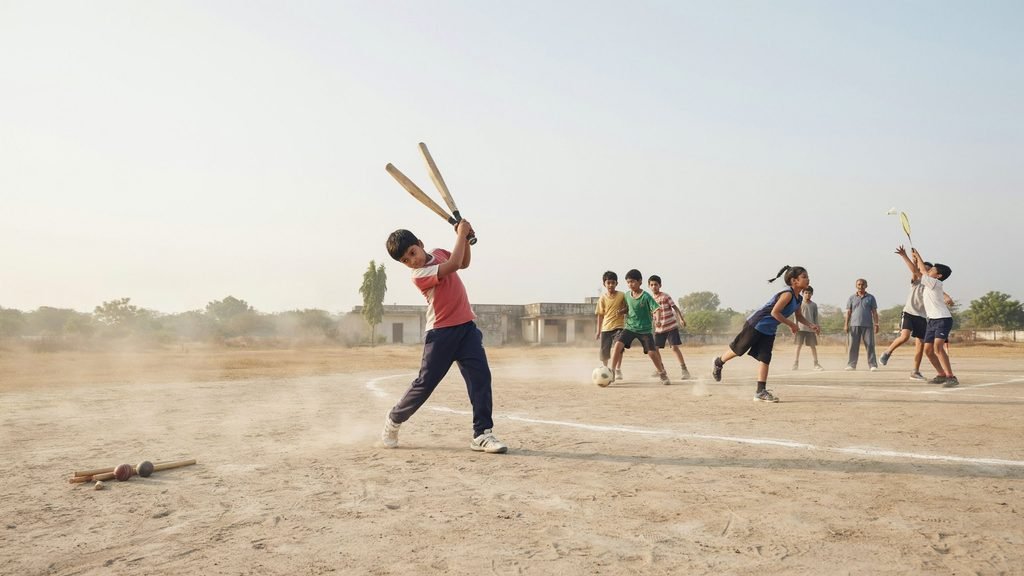
Why Does India Need Government Initiatives to Promote Sports?
Sports development involves much more than winning medals. A strong sporting ecosystem encourages physical fitness, discipline, teamwork, confidence and opportunities for young people from different backgrounds.
For many aspiring athletes, particularly those from rural communities or financially constrained households, the cost of equipment, coaching, travel and competition can become a barrier. Access to a suitable playground or qualified coach may also be limited.
Government initiatives can help address these challenges through several approaches:
- Grassroots talent identification: Finding promising athletes at an early age and providing opportunities to develop their abilities.
- Sports infrastructure: Building, upgrading and improving access to playgrounds, training centres and sports facilities.
- Financial support: Providing eligible athletes with assistance for training, equipment, competition participation and related expenses.
- Professional coaching: Improving access to qualified coaches, sports science and structured training.
- Inclusive participation: Expanding opportunities for women, para-athletes, rural communities and underrepresented groups.
- Fitness awareness: Encouraging people to make physical activity part of everyday life.
These objectives are reflected in the Ministry of Youth Affairs and Sports’ programmes and the national sports policy framework.
The key idea is to create a pathway that allows more people to participate in sports while helping talented athletes progress towards higher levels of competition.
1. Khelo India Scheme: A Major Government Initiative to Promote Sports in India
Khelo India is one of India’s flagship programmes for sports development. Introduced in 2016–17, it aims to encourage mass participation in sports, identify talent and improve the country’s sporting infrastructure.
The programme is designed to support sporting opportunities at the grassroots level while helping promising athletes develop the skills required to compete at higher levels.
The Ministry of Youth Affairs and Sports provides programme oversight, with the Sports Authority of India (SAI) and other institutions implementing relevant components.
Key objectives of Khelo India
The programme has covered areas such as:
- Creation and upgrading of sports infrastructure.
- Sports competitions and talent development.
- Khelo India Centres and sports academies.
- The Fit India Movement.
- Greater inclusiveness through sports.
The precise structure and terminology of programme components can change between scheme periods. Readers should consult the current guidelines for the applicable provisions.
What are the benefits of Khelo India?
Depending on the programme, selection and applicable rules, athletes and sports organisations may find opportunities related to:
- Participation in organised sporting competitions.
- Access to recognised training facilities and academies.
- Identification and development of promising sporting talent.
- Structured coaching and athlete development.
- Opportunities to progress from grassroots competitions to higher-level events.
Khelo India is particularly relevant to young athletes who want to develop their sporting abilities through a more structured pathway.
However, participation in a Khelo India event does not automatically guarantee a scholarship, selection for elite training or financial assistance. Benefits depend on the relevant programme, eligibility criteria and selection process.
Khelo India in 2026: What has changed?
In 2026, the Union Cabinet approved a revamped Khelo India Scheme alongside enhanced assistance to National Sports Federations, with a combined announced outlay of ₹36,441 crore for 2026–27 to 2030–31.
The expanded framework is intended to strengthen grassroots development, talent identification, coaching, sports science, competitions and infrastructure. It also introduces initiatives such as Khelo India Feeder Schools and Khelo India Utkrishta Vidyalayas, intended to improve the connection between education and sports development.
The announcement represents an important development in the Indian government’s approach to sports. However, the combined outlay covers two schemes, not Khelo India alone, and should not be interpreted as a guaranteed payment pool for individual athletes.
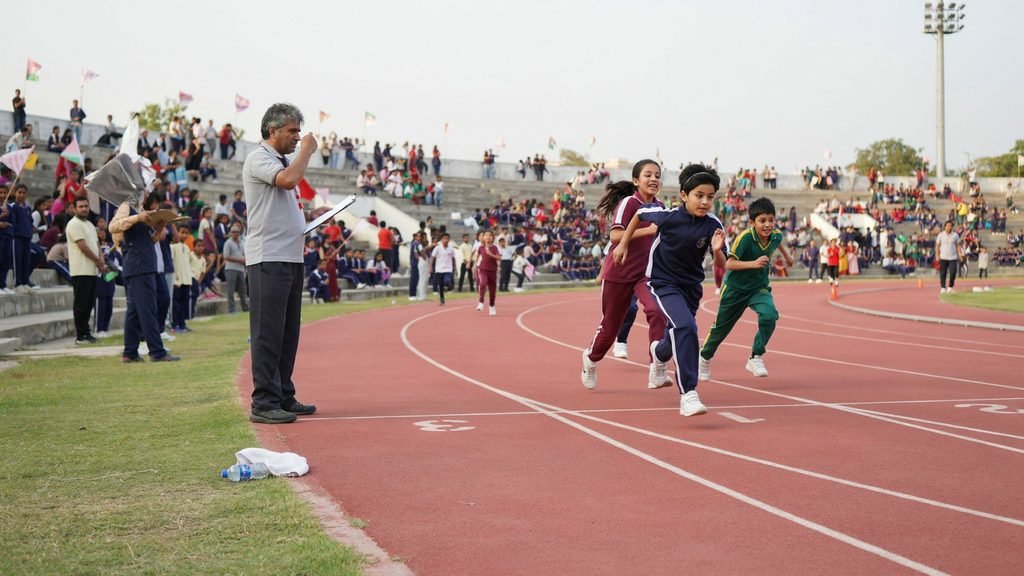
2. Fit India Movement: Promoting Fitness Across the Country
The Fit India Movement was launched in 2019 to encourage people to adopt healthier and more active lifestyles.
While Khelo India focuses on both participation and sporting development, Fit India places particular emphasis on making physical activity a regular part of everyday life.
The initiative recognises that a healthy sporting culture begins with communities, families, schools and workplaces—not only professional athletes.
Main objectives of Fit India
The movement promotes:
- Regular physical activity and exercise.
- Fitness awareness among schoolchildren and adults.
- Community participation in sporting and fitness activities.
- Healthier daily habits and active lifestyles.
- Greater awareness of the importance of movement and exercise.
Schools, educational institutions, communities and organisations can use fitness activities to encourage participation.
How can students and families benefit?
Parents can introduce children to outdoor games, swimming, running, cycling and other age-appropriate activities. Schools can organise sports days and structured fitness sessions, while adults can participate in community events and recreational sports.
It is important to understand that Fit India is primarily a fitness-promotion movement. It should not be confused with a universal cash scholarship or a direct financial assistance programme for athletes.
For parents, the practical value is straightforward: children who participate regularly in suitable physical activities can develop fundamental movement skills and discover which sports interest them.
3. Target Olympic Podium Scheme (TOPS): Supporting Elite Athletes
The Target Olympic Podium Scheme, commonly known as TOPS, is intended to support Indian athletes with the potential to win medals at major international competitions, including the Olympic Games.
Unlike initiatives focused primarily on mass participation, TOPS concentrates on high-performance sport.
The scheme operates through a selection-based process. Athletes are identified based on performance, potential and relevant sporting criteria, with input from sports experts and other stakeholders.
What support can selected athletes receive?
Depending on the applicable provisions and an athlete’s approved requirements, support may include:
- Specialised training at suitable facilities.
- Access to experienced coaches and technical experts.
- Sports science and related performance support.
- Training and competition-related travel.
- Equipment and other approved athlete-development expenses.
The purpose is to help selected athletes prepare at the level required to compete against the world’s best.
Who should consider TOPS?
TOPS is most relevant to athletes who have already demonstrated high-level performance and are being considered for elite international competition.
It is not a general grant that every aspiring player can claim simply by submitting an application. Selection and approved assistance depend on the scheme’s current criteria and the athlete’s sporting profile.
Young athletes who are still developing their skills should generally focus first on recognised competitions, coaching, state or national pathways and other programmes for which they qualify.
4. Khelo Bharat Niti 2025: India’s National Sports Policy Framework
The government launched Khelo Bharat Niti 2025 on 10 July 2025. The policy sets out a broader vision for building a strong, inclusive and performance-driven sports ecosystem.
Its central idea is that sports can contribute to national development, individual wellbeing, education, community participation and India’s performance in international competitions.
Important focus areas
The policy addresses several interconnected priorities:
Grassroots participation: Creating more opportunities for children and young people to participate in organised sports.
Talent identification: Finding promising athletes across urban and rural areas and improving the pathway from discovery to advanced training.
Infrastructure development: Improving access to suitable sports facilities and training environments.
Inclusion: Expanding sporting opportunities for women, people with disabilities and economically disadvantaged communities.
Sports and education: Strengthening the relationship between educational institutions and sports development.
Professional sports ecosystem: Encouraging improvements in coaching, sports science, technology and partnerships between government and other stakeholders.
The policy is significant because sports development requires coordination among schools, state governments, national federations, coaches, academies, communities and private organisations.
A policy framework, however, is not the same as an individual benefit scheme. Athletes should check which specific programme, institution or funding provision applies to their circumstances.
5. Sports Authority of India (SAI): Training and Athlete Development
The Sports Authority of India is an important institution in India’s sports development system. It supports athlete training and development through its centres, academies and other programmes.
SAI works with the Ministry of Youth Affairs and Sports and other sporting institutions to help develop athletes and improve high-performance capabilities.
How does SAI support sports?
Depending on the centre and programme, its activities can include:
- Training facilities for selected athletes.
- Coaching and athlete development.
- Support through National Centres of Excellence.
- Preparation for national and international competitions.
- Sports science and performance-related services.
- Talent identification and development initiatives.
How can aspiring athletes explore SAI opportunities?
Athletes and parents should visit the official SAI website to review current admissions, trials, recruitment notices and programme information.
Selection criteria can vary by sport, age group, centre and programme. Some opportunities may involve trials or performance-based selection.
Before applying, check the eligibility requirements, documentation, trial schedule, training arrangements and any applicable charges.
Do not assume that every SAI facility offers open admission or free residential training to all applicants.
6. National Sports Development Fund (NSDF): Supporting Sporting Excellence
The National Sports Development Fund was established in 1998 to provide additional support for sports promotion and excellence in India.
The fund can help address requirements that contribute to the development of athletes, sporting disciplines and infrastructure.
What does the fund support?
Subject to the applicable guidelines and approval process, NSDF assistance can cover areas such as:
- Sports infrastructure development and improvement.
- Procurement of sporting equipment.
- Specialised coaching and training.
- Athlete preparation and competition-related support.
- Sports research and development.
- Other activities that promote sporting excellence.
The fund can also facilitate contributions from individuals, public-sector organisations and private companies towards sports development.
Is NSDF a direct scholarship for every athlete?
No. The NSDF should not be treated as a universal scholarship or an automatic entitlement for individual players.
The nature of assistance, eligible applicants and approval process depend on the relevant rules. Athletes and organisations should consult the official guidelines before assuming that a particular expense or project will qualify.
For sports academies and organisations, understanding the fund’s provisions can help identify potential avenues for supporting equipment, facilities and athlete development.
7. Assistance to National Sports Federations
National Sports Federations play an important role in organising competitions, developing athletes and managing sport-specific pathways.
The government provides assistance to recognised national federations under applicable schemes to support the development and preparation of Indian teams.
The enhanced assistance approved in 2026, alongside the revamped Khelo India Scheme, aims to strengthen this part of the sports ecosystem for the 2026–27 to 2030–31 period.
Depending on approved plans and current guidelines, support can cover areas such as:
- National coaching camps.
- Coaching and technical expertise.
- Equipment and sports science.
- International exposure for athletes.
- Participation in major competitions.
- Preparation of national teams.
This is an important distinction for athletes: some opportunities are accessed through a national or state federation rather than through a direct public application.
Players should identify the recognised federation for their sport and follow its official announcements for trials, selection events, rankings and competition eligibility.
8. Government Support for Women, Para-Athletes and Rural Sports
A successful national sports system must identify talent wherever it exists. Sporting ability is not restricted by gender, geography, disability or family income.
Government sports programmes have increasingly emphasised inclusion and wider participation.
Women in sports
Girls and women need access to safe facilities, qualified coaching, suitable equipment and regular competitions. Dedicated competitions and talent-development initiatives can help expand opportunities.
Parents should look for programmes that provide appropriate coaching environments and transparent selection procedures.
Para-sports
Athletes with disabilities require accessible facilities, suitable equipment and sport-specific coaching. Relevant programmes may support participation and development, although eligibility and support differ by discipline.
Athletes should also consult the appropriate recognised sports organisations and para-sport bodies for classification, competition and selection information.
Rural and indigenous sports
Rural communities and indigenous sporting traditions represent an important source of athletic ability and cultural knowledge.
Support for grassroots competitions, local infrastructure and traditional disciplines can help more athletes enter organised sport.
The objective is not merely to discover exceptional performers but to make sporting opportunities more accessible across the country.
9. How Can an Athlete Apply for Government Sports Schemes in India?
One of the most important questions for parents and players is how to move from awareness to action.
There is no single application form for all government sports initiatives. Each scheme has its own purpose, selection criteria, application process and documentation requirements.
Use the following process to identify suitable opportunities.
Step 1: Identify your sporting objective
First, decide whether you are looking for beginner-level coaching, a local competition, a talent-identification programme, academy admission, financial assistance or elite athlete support.
This will help narrow down the schemes worth investigating.
Step 2: Check official government portals
Start with the relevant government websites:
- Ministry of Youth Affairs and Sports: https://yas.gov.in/
- Khelo India: https://www.kheloindia.gov.in/
- Sports Authority of India: https://sportsauthorityofindia.nic.in/
- MyScheme: https://www.myscheme.gov.in/
Look for the latest notifications, operational guidelines, eligibility conditions and application dates.
Step 3: Review eligibility carefully
Check the age limit, sport or discipline, competition history, performance requirements, residency conditions and other criteria.
Some programmes are designed for children or emerging athletes, while others are aimed at established competitors.
Step 4: Prepare the necessary documents
Depending on the programme, you may need:
- Proof of age and identity.
- Recent photographs.
- Address or residency documents.
- Sports certificates and competition results.
- Performance records or trial results.
- Educational documents, where required.
- Other documents specified in the notification.
Do not submit sensitive documents to unofficial websites or individuals claiming to guarantee selection.
Step 5: Follow the official application process
Complete the required form and submit documents through the authorised channel. If the scheme uses trials, selection camps or recommendations from a sports body, follow the published instructions.
Save your application reference, acknowledgement and copies of submitted documents.
Step 6: Verify the outcome and next steps
Monitor official notifications and communications. If selected, read the terms carefully to understand what is covered, what responsibilities you have and whether the support is conditional on continued performance or participation.
Important: Avoid agents or websites that promise guaranteed government scholarships, selection or cash assistance in exchange for an unofficial fee.
10. Sports Equipment, Training and Affiliate Recommendations: What Athletes Should Buy
Government schemes can improve access to facilities, training and competition. However, athletes also need to make practical decisions about their day-to-day training requirements.
For parents and beginner athletes, equipment shopping can become confusing. A large selection of bats, shoes, racquets, protective gear and training accessories makes it difficult to distinguish essential purchases from optional upgrades.
The best approach is to purchase equipment according to the athlete’s sport, age, skill level, training frequency and budget.
Essential equipment for different sports
| Sport | Useful equipment to consider | What to check before buying |
|---|---|---|
| Cricket | Bat, cricket balls, batting gloves, pads and suitable footwear | Correct size, fit, playing conditions and safety |
| Running and athletics | Running shoes, training clothes and a stopwatch | Fit, comfort, surface and training requirements |
| Badminton | Racquet, suitable shoes, shuttlecocks and grip | Racquet weight, grip size and court traction |
| Football | Football, appropriate boots, shin guards and training clothing | Playing surface, fit and protective requirements |
| Fitness training | Resistance bands, a skipping rope and a suitable exercise mat | Durability, intended use and safe technique |
For beginners, buying a complete collection of expensive equipment is rarely necessary. Start with the essentials and upgrade when the athlete’s skills and training demands justify it.
For example, a young cricketer may benefit more from correctly sized protective equipment and regular coaching than from purchasing the most expensive bat available.
Similarly, a runner should prioritise suitable footwear, a gradual training plan and recovery rather than investing immediately in advanced wearable technology.
How to choose reliable sports products online
Before buying, compare the product specifications, return policy, warranty, seller reputation and total cost. Read customer reviews critically, paying particular attention to comments from buyers with similar needs.
Do not assume that the most expensive product is the best option. Nor should a high rating alone determine your purchase.
If you recommend products through an affiliate website, clearly explain why a product is suitable for a particular type of athlete. Useful comparisons should discuss fit, durability, comfort, intended use and value for money rather than simply repeating manufacturer claims.
A practical affiliate marketing approach for sports content
An effective sports affiliate article should help readers make informed decisions before presenting a product link.
For example, an article about cricket training can include a comparison of beginner cricket kits, protective equipment and training accessories. An article about running can explain the differences between everyday trainers and competition shoes before recommending suitable options.
A good product section should answer four questions:
- Who is this product suitable for?
- What problem does it solve?
- What are its limitations?
- Is there a more affordable alternative?
Affiliate links should be placed where they genuinely help the reader. Use clear calls to action, such as “Compare beginner cricket kits” or “Check current prices,” rather than inserting repetitive purchase prompts throughout the article.
Affiliate disclosure: If you earn a commission from qualifying purchases, disclose this clearly near the beginning of the article or before the relevant affiliate links. Explain that the reader may not pay anything extra, while making it clear that the site may receive compensation.
Keep government information and commercial recommendations separate. Never imply that a particular sports product is government-approved, required by a government scheme or guaranteed to improve performance unless reliable evidence supports that claim.
The long-term advantage of this approach is trust. Readers are more likely to return to a sports website that provides useful, balanced guidance rather than treating every visit as a sales opportunity.
11. The Role of Schools, Coaches and Private Sports Organisations
Government programmes are an important part of sports development, but they cannot identify and nurture every talented athlete without support from local institutions.
Schools introduce children to sports. Coaches help them develop technique. Clubs organise regular practice. Academies provide structured development, while local competitions allow athletes to test their abilities.
Private organisations can complement these efforts by organising transparent competitions, creating talent-discovery opportunities and helping athletes gain visibility.
For example, a well-organised local cricket competition can give an aspiring fast bowler an opportunity to demonstrate pace and control in a competitive environment. Coaches can then assess the player’s technique, consistency, fitness and potential for further development.
Such competitions do not replace formal government selection or guarantee admission to an academy. However, they can provide valuable experience and help athletes build a record of performance.
The most effective sports ecosystem is one in which schools, local clubs, event organisers, coaches, government institutions and recognised sports bodies work towards a shared objective: helping athletes develop safely and progress through credible sporting pathways.
12. Challenges and the Way Forward for Sports in India
Despite progress in sports policy and infrastructure, several challenges remain.
Unequal access to facilities
Some areas have well-equipped training centres, while others lack suitable grounds, equipment or qualified coaches. Improving access and maintaining existing facilities are both important.
The cost of training
Travel, accommodation, nutrition, equipment and coaching can create financial pressure for families. Eligible assistance programmes and affordable local facilities can help, but support must reach athletes who need it.
Limited awareness
Athletes and parents may not know which programmes exist, where to apply or how selection works. Clear official information and outreach through schools and clubs can improve awareness.
The need for qualified coaches
Athletes require more than motivation. Good coaching, appropriate workload management, injury prevention and sports science can make training safer and more effective.
More competitive opportunities
Regular competitions help athletes assess their progress. Local and regional events can provide a foundation for progression to state and national competitions.
Transparent selection and accountability
Clear eligibility requirements, published results, accessible grievance procedures and credible communication can help strengthen confidence in sports programmes.
Ultimately, government funding and policy announcements are only part of the solution. Success also depends on implementation, access, quality coaching, sustained participation and opportunities for athletes to compete.
Conclusion: Building a Stronger Sporting Future for India
The Indian government initiative to promote sports in India is not limited to a single programme. It encompasses grassroots development, fitness awareness, athlete training, sports infrastructure, elite performance support and a broader policy vision for the future.
Khelo India encourages participation and talent development. Fit India promotes active lifestyles. TOPS supports selected elite athletes. SAI provides important training and development infrastructure, while NSDF and assistance to recognised sports federations contribute to wider sporting objectives.
Khelo Bharat Niti 2025 provides an overarching policy framework, and the expanded sports-development initiatives approved in 2026 indicate a continued emphasis on strengthening India’s sporting ecosystem.
For athletes and parents, the practical next step is to identify the relevant programme, verify current eligibility and follow official application channels. For schools, coaches, clubs and private organisations, the opportunity lies in making sports more accessible, structured and inclusive.
India’s future sporting success will depend not only on the medals its athletes win but also on how many children discover sports, how many promising athletes receive the support they need and how effectively opportunities reach communities across the country.
A stronger sports culture begins when talent is recognised, effort is supported and more people have a genuine opportunity to participate.